You do sophisticated deals with a small team, which means the constraint is never ambition, it's bandwidth. Sherpa pairs every seat you have and fills the ones you don't.
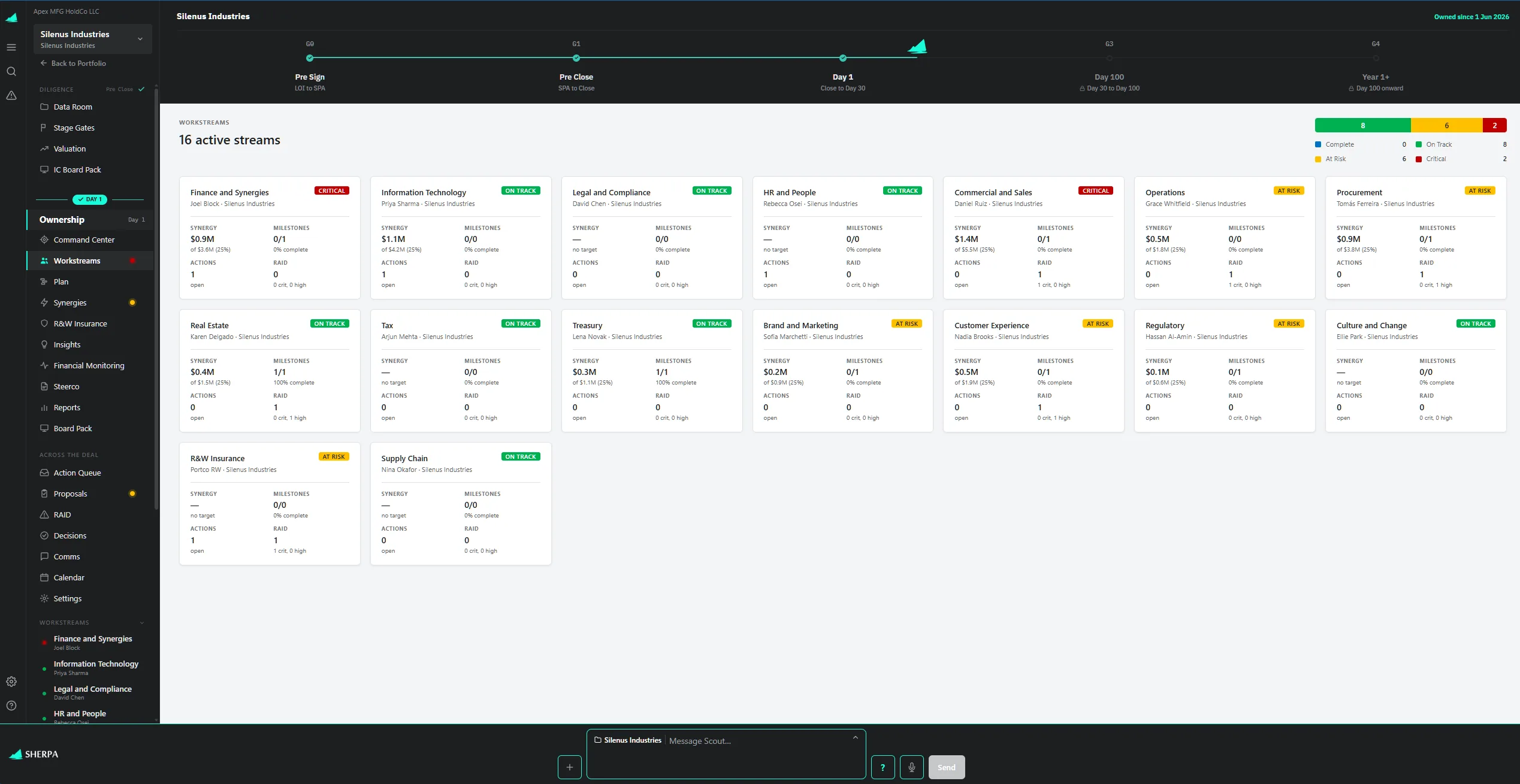
Standing up an in-house integration function is a cost most family offices can't justify for the deal count, so don't. Your one operating partner gets seventeen counterparts: Warren on the numbers, Clarence on the contracts, Emma on the people, Oz on the systems, and the rest of the bench. Adrian handles diligence questions, Scout keeps the bench coherent. The muscle of an institutional deal team without the institutional payroll.
Holdings this varied are exactly where industry depth runs out fastest, so each deal also draws an industry specialist matched to it. The hotel and the specialty manufacturer don't get the same one, and neither of them gets it by default: you confirm the industry before anyone joins.
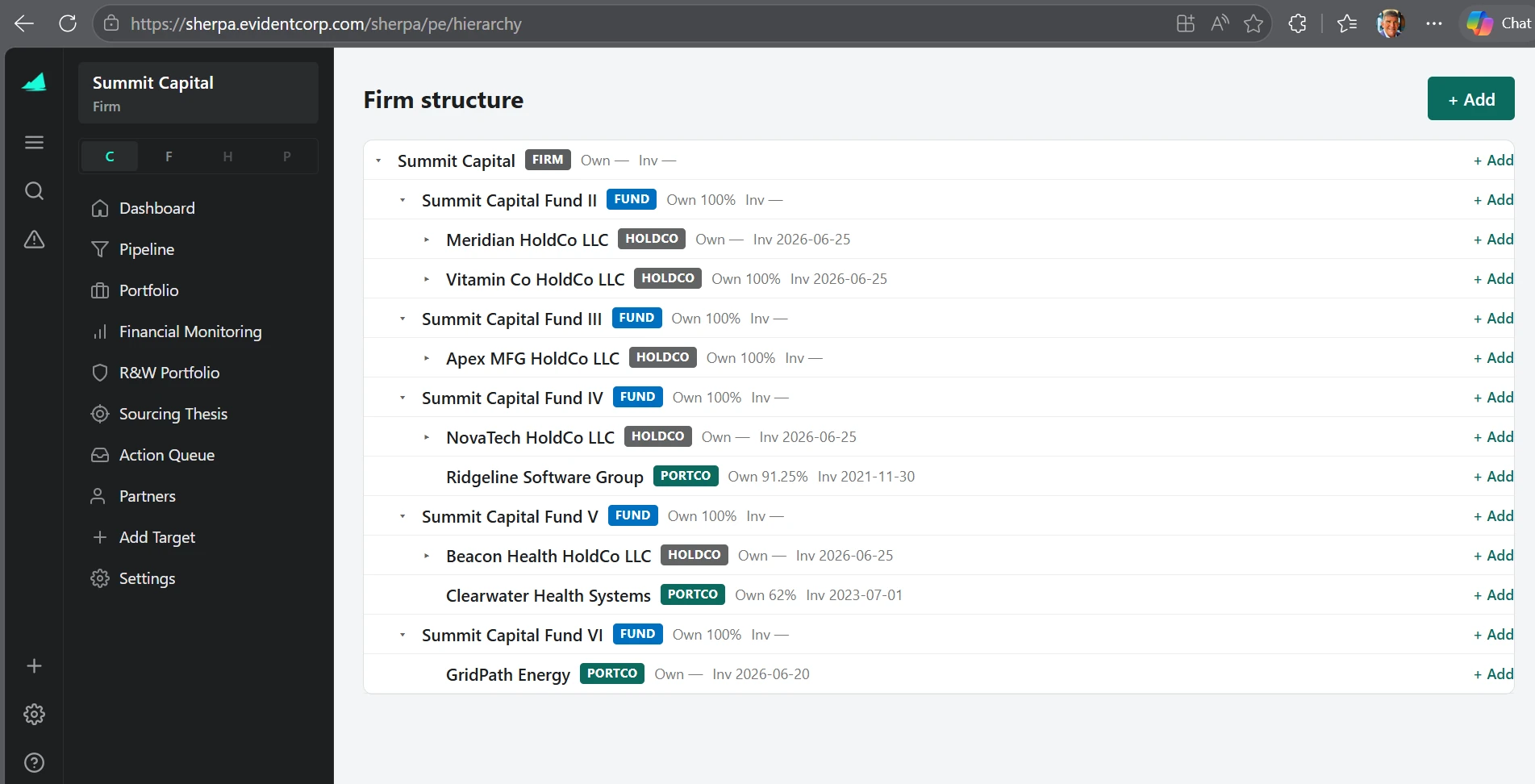
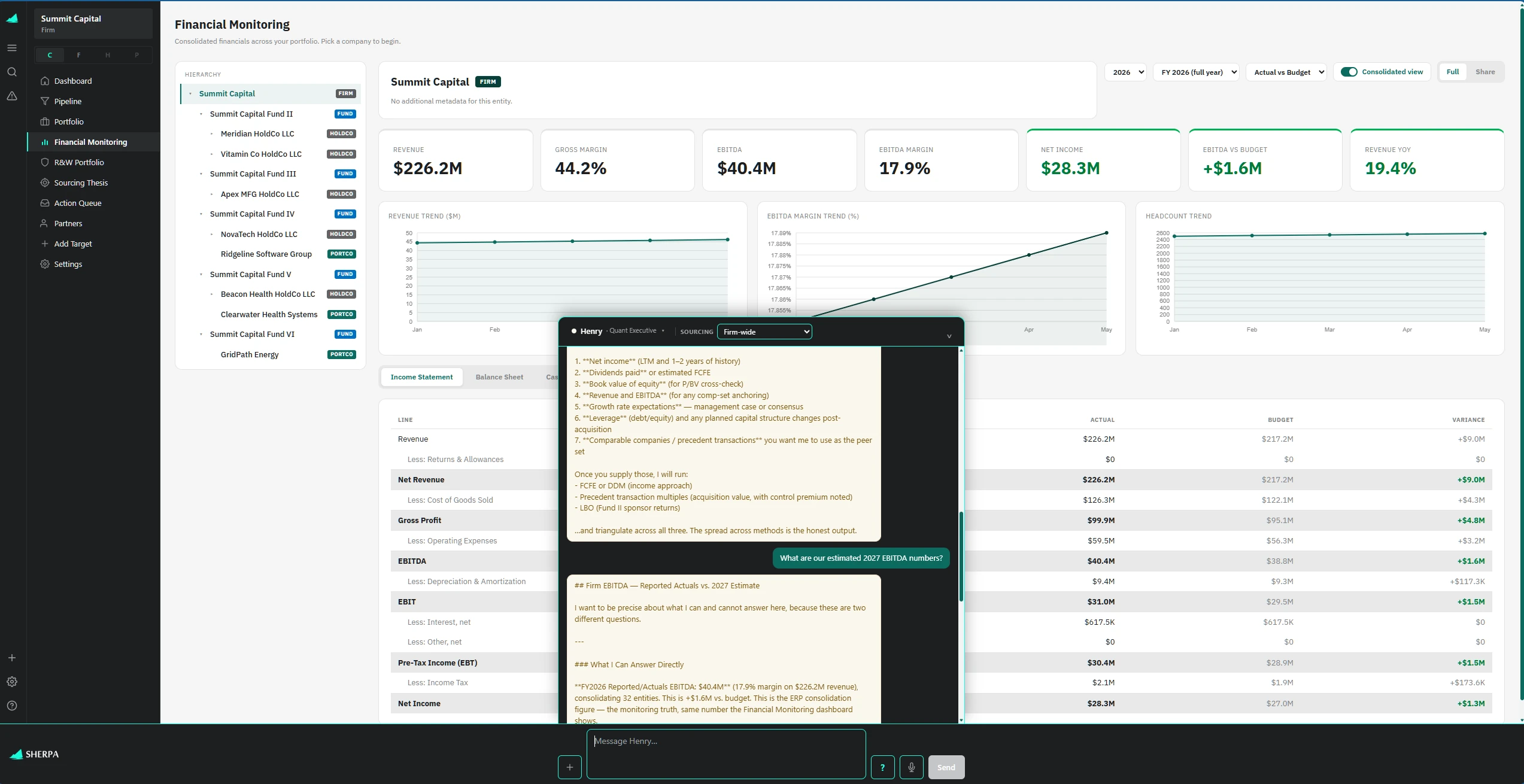
Sherpa models your actual structure, entity by entity, with ownership and investment dates. Henry reads across the whole structure the way a principal would, running valuation and capital allocation over everything you hold. For a small team managing diverse assets, that's a single view of where the value sits and where the next dollar should go, without a dedicated analytics function to produce it.
Every deal leaves something behind: sharper templates, a taxonomy that fits how you actually work, partners that build on what your earlier deals taught them. A lean team gets the one thing that usually takes a big one, which is an institution that remembers. Your deals stay walled off from each other. Your office keeps getting better at this.
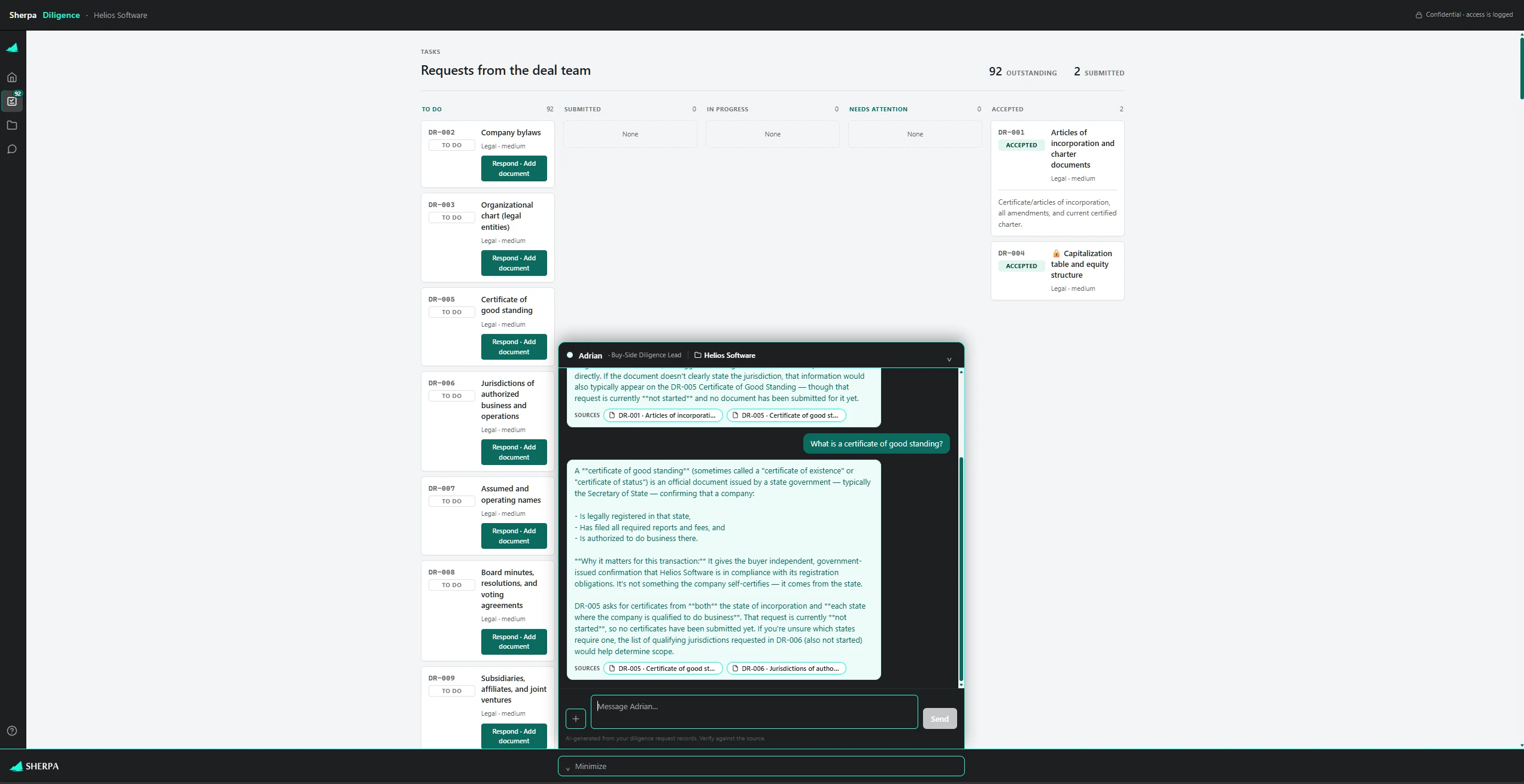
Drop in the documents and ask. Adrian answers from what's in them with the source cited, scoped to who's asking, which gives a small team the kind of diligence leverage that used to take a room full of analysts.
Built on the integration playbooks McKinsey, Bain, BCG, Deloitte, and KPMG charge millions for.
Give us fifteen minutes and we'll show you Sherpa working a live integration.
Request a demo