Your job is absorbing a company into one that's already running full speed. The hard part isn't the deal, it's the four hundred things that have to happen between signing and the first Monday. Sherpa sequences them and staffs them.
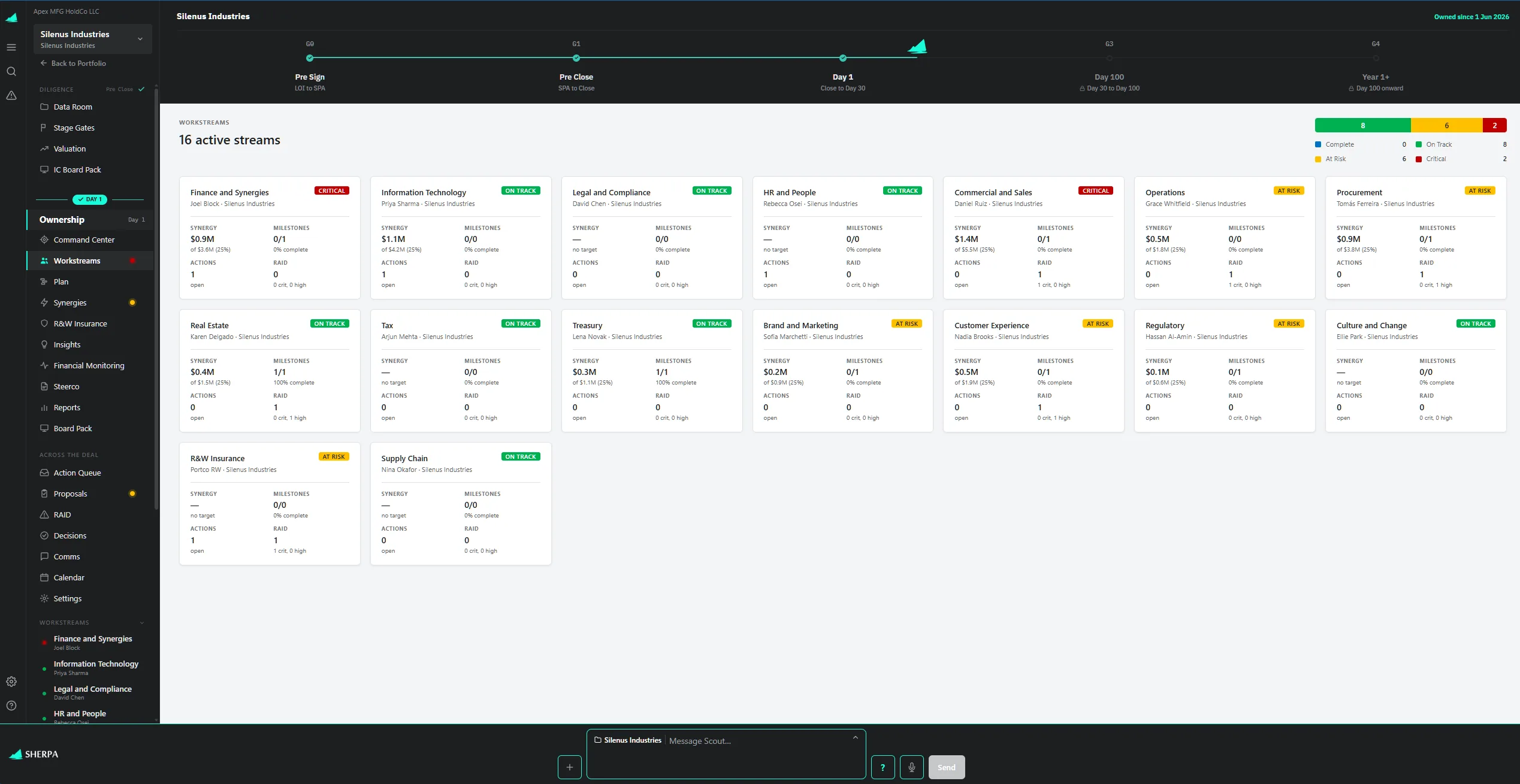
A corporate integration hits everything at once, and usually with the same people who still have their day jobs. Oz works with your IT lead on cutover and TSAs. Clarence works with legal on contract novation. Emma works with your head of people on keeping the talent you paid for. Samantha on tax, Ziggy on suppliers, Dale on the commercial motion, across all seventeen seats. Scout keeps them in sync so the workstreams don't drift apart.
An industry specialist joins them for the target you're buying. When that's adjacent to your own business rather than inside it, it's the partner who already knows the regulatory shape and the margin structure your team is meeting for the first time.
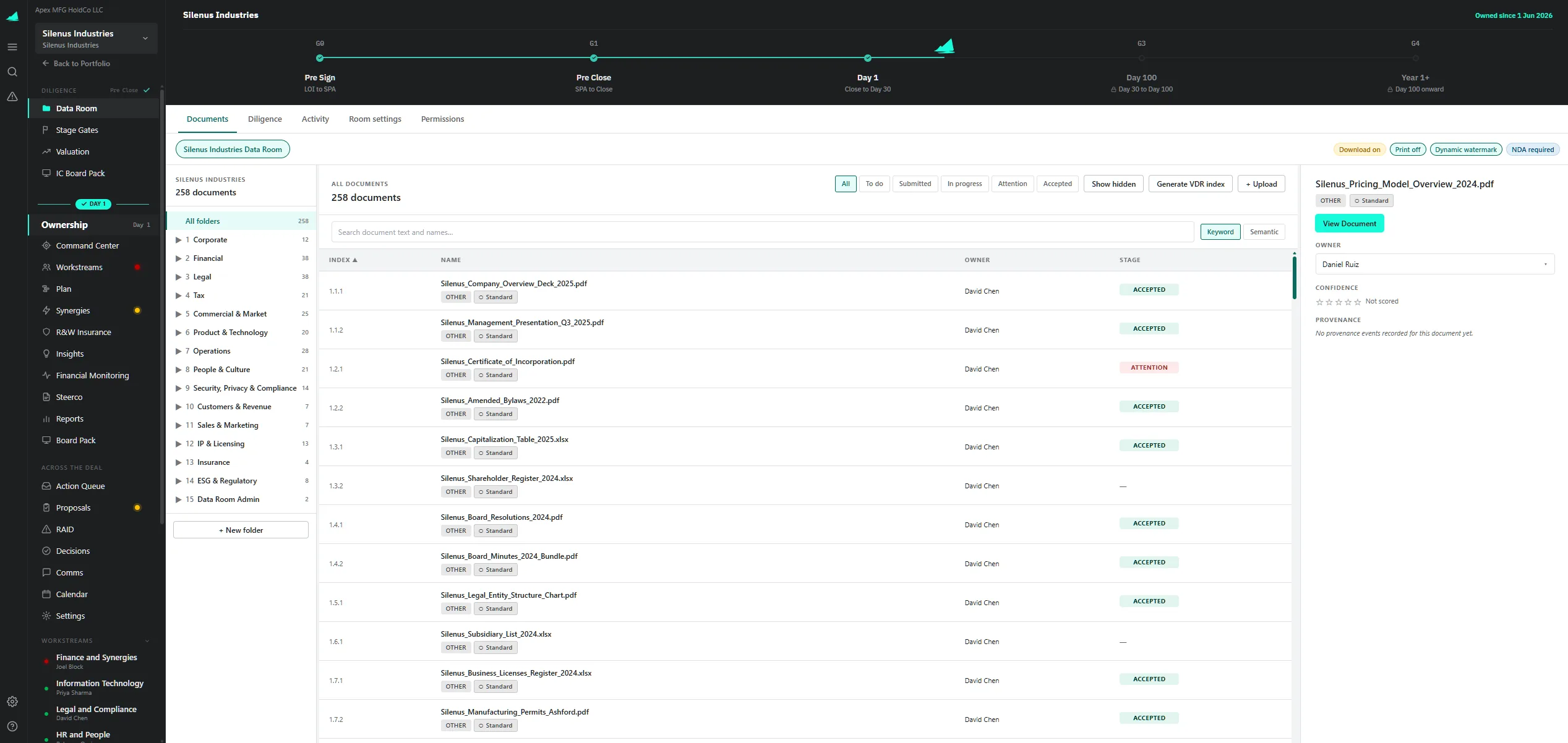
Dewey files the documents as they arrive and Adrian answers questions from what's in them. What matters for a corporate acquirer is what happens next: that same structure becomes the integration plan at close, so the work you did testing the target is the work you start from integrating it. Nothing gets rebuilt.
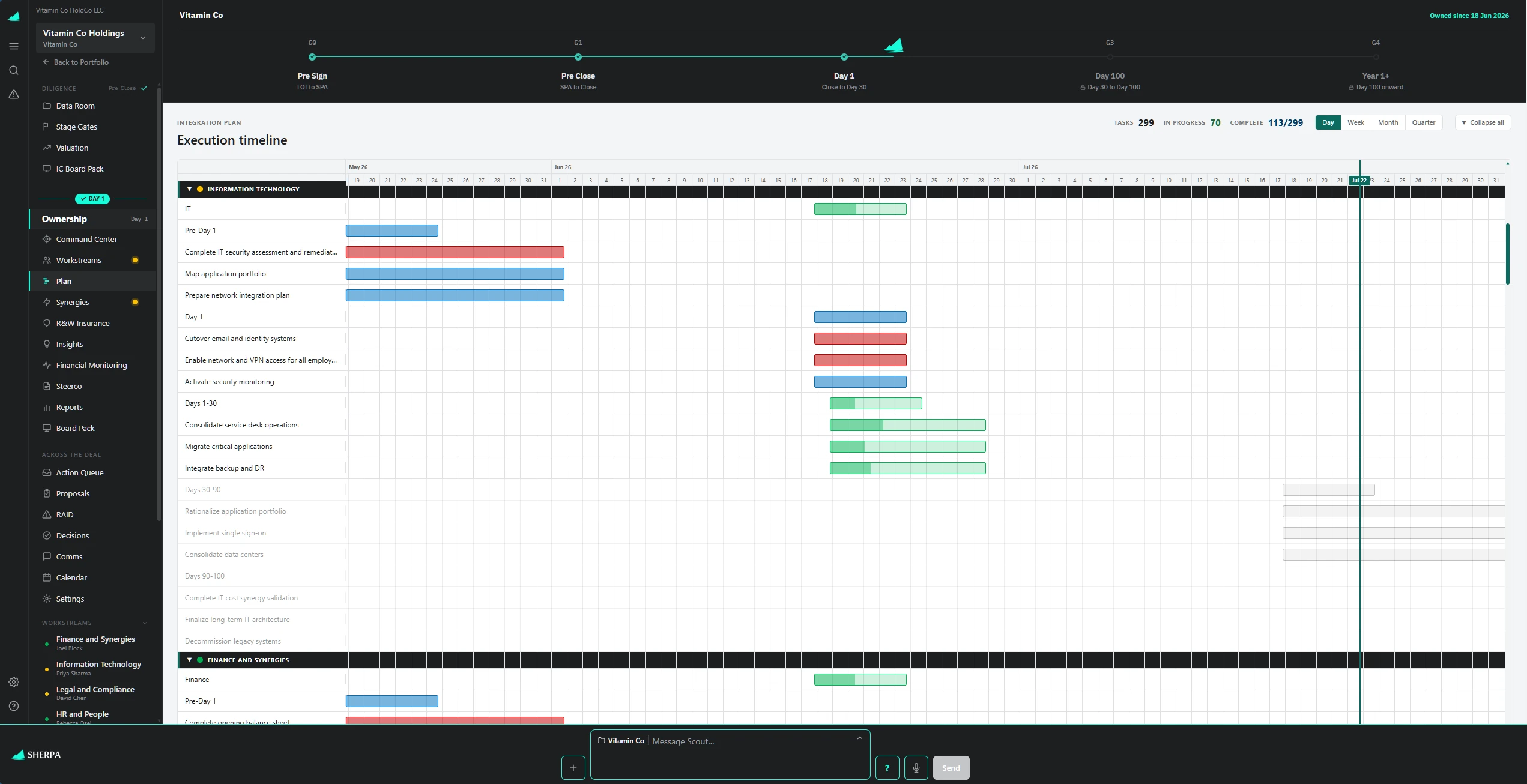
Legal Day 1 and Operational Day 1 aren't the same event, and treating them as one is how integrations go sideways. Sherpa carries them separately and sequences accordingly: systems access, banking, contract novation, payroll, branding, the customer note that has to go at the right hour. The dependencies are mapped and the critical path is visible, so the things that have to happen before close actually happen before close.
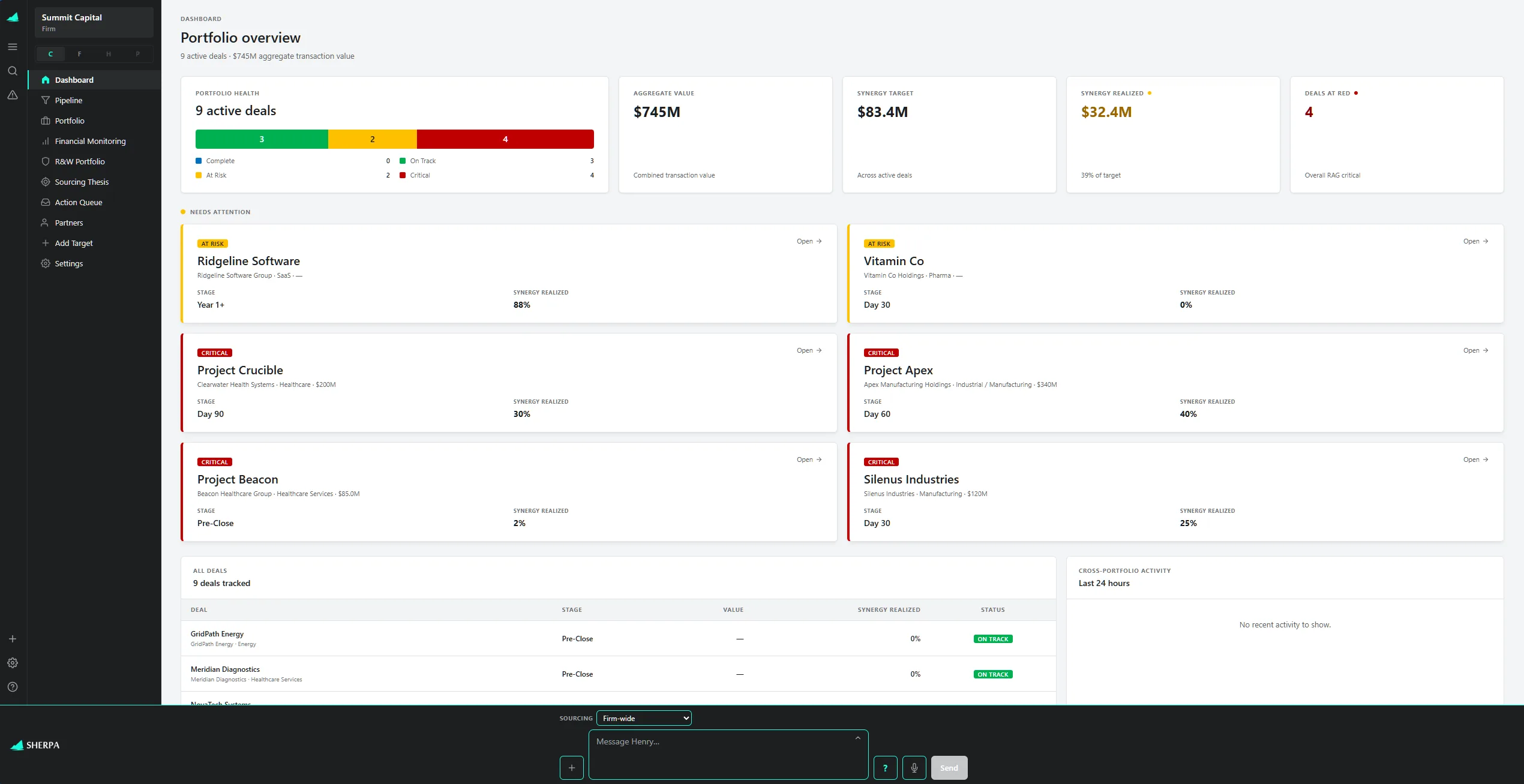
The plan updates itself as the partners work, synergy tracking tells you whether the deal is delivering, and the board view is ready when you need it. The whole thing runs in the open, which is the only way anyone catches a problem while it's still small.
Give us fifteen minutes and we'll show you Sherpa working a live integration.
Request a demo